Not a medical device · Experimental use only · All risks assumed by user
v3.2 · Predictive Error Induction System

You don't want
the light.
You want the question.

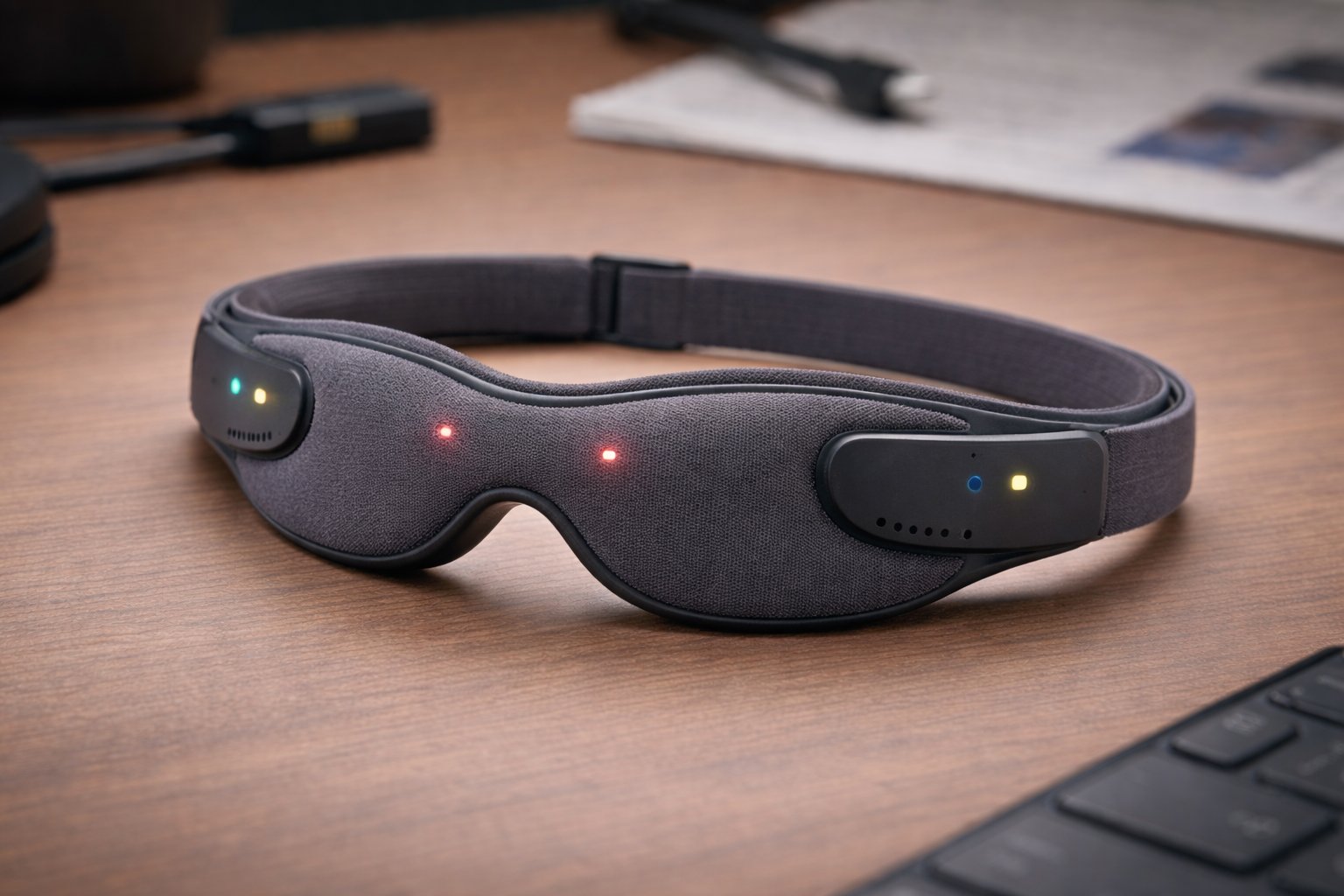
Velo-X introduces a controlled error into your brain's predictive simulation during REM sleep. It doesn't promise lucidity. It creates the conditions in which lucidity becomes possible.

Velo-X Predictive Error Induction System
Next generation — in development
VELO—X Gen 4
Cortical resonance mapping · Closed-loop induction · No strap
Development ongoing · Last confirmed: November 2024
Reveal window — passed
00days
:
00hours
:
00min
:
00sec
Target: 14 March 2025 · No announcement made
18g

Lighter than a thought

The entire assembly weighs less than four sheets of paper. Medical-grade silicone contact points. Breathable knit band. Designed to disappear — if you feel it, it's not working.

01 Components
Technical specifications last verified November 2024 — no further updates scheduled

Ocular Detection

Flat EOG electrodes, low profile, for rapid eye movement monitoring. Adjustable REM detection threshold.

2× dry Ag/AgCl · 12–40 µV · impedance < 5kΩ

Light Induction

Two red micro-LEDs (625nm), encapsulated in opaque diffuser. Configurable pulse count, interval, and intensity.

0.02–0.8 cd/m² · 1–6 pulses · 300–1200ms

Heart Rate Variability

Optical PPG sensor with infrared LED. Real-time HRV for sleep depth estimation and optimal intervention windows.

64Hz sampling · 14-bit resolution

Motion Tracking

6-axis IMU for head micro-movement detection. Differentiates active sleep, partial arousal, and voluntary movement.

BMI270 · ±2g / ±250°/s

Haptic Feedback

Sub-threshold LRA vibration motor. Not for waking — calibration and discreet confirmation only.

0.1–0.4 G · response < 15ms

Local Processing

On-device detection, filtering, and decision-making. Zero cloud transmission. Every twitch stays yours.

nRF5340 · 128MHz · BLE 5.3
02 How it works

Passive Monitoring

Sensors identify REM entry by correlating ocular signal, heart rate variability, and micro-movements. No intervention during non-REM phases.

Error Induction

During a stable REM window, the device emits a sub-conscious light signal. The brain tries to integrate it into the dream narrative. If integration fails — a crack appears.

Adaptive Recalibration

The algorithm adjusts intensity and timing based on physiological response. If the signal wakes you, it decreases. If ignored, it increases. It searches for the threshold.

The Question

The integration crack may trigger a reflexive question: "am I awake?" The device doesn't produce lucidity. It produces the condition in which your mind can produce it on its own.

"The device doesn't open the door.
It helps me not close it myself."
— user journal, night 47
03 Documented risks

⚠ Read before continuing

Velo-X is not a medical device. It has not been evaluated by any regulatory authority. User-documented effects include: sleep fragmentation, transient insomnia, daytime irritability, sensory hypersensitivity, anxiety episodes, difficulty concentrating, mild dissociative states, and what the community calls "glossy fatigue" — a perceptual film that alters your relationship with real stimuli.


Long-term use has not been systematically studied. We do not recommend use by persons with a history of sleep disorders, epilepsy, dissociative disorders, severe anxiety, or any active psychiatric condition. If you enter a poorly lit territory, don't complain about the dark.

04 Documentation
Getting Started

First 30 Nights Protocol

Calibration sequence, threshold adjustment, and what to expect during the adaptation phase. Start here.

PDF · 12 pages · v3.2
Technical

Signal Parameters & Tuning

LED intensity curves, pulse timing windows, REM detection sensitivity, and advanced threshold configuration.

PDF · 28 pages · v3.2
Reference

Hardware Specifications

Full component breakdown, sensor datasheets, battery life estimates, firmware changelog, and BLE protocol.

PDF · 44 pages · v3.2.1
Guide

Reality Check Training

Daytime protocols to increase signal recognition probability. Why wanting it too much is the problem.

PDF · 8 pages · community-authored
Research

Predictive Processing & REM

The theoretical framework behind error induction. How the brain's predictive model handles anomalies during sleep.

PDF · 16 pages · references: 34
Safety

When to Stop

Recognizing adverse patterns. Sleep debt markers. Dissociation thresholds. How to wind down the protocol safely.

PDF · 6 pages · v3.2
05 The Latent Space

The manual is the forum.
The forum is the manual.

The Latent Space is where Velo-X users share protocols, failures, and the rare moments that make it all worth it. No hype. No success stories without context. Enthusiasm is suspect. Discipline is respected.

Membership requires a device serial number. Lurking is encouraged. Asking naive questions is penalized — not with insults, but with sarcasm precise enough to recalibrate your expectations.

The useful posts are never just reports. They include sleep timing, firmware version, cue intensity, REM onset estimate, what the dream environment was doing before the cue, and what happened in the thirty seconds after the user realized something was wrong. A clean failure log is valued more than a mystical success narrative.

This forum has been archived. New registrations and posts are no longer accepted.
Existing threads remain readable. Last activity: November 2024.
06 Contact
Contact suspended — messages are not being monitored · Last response: 4 months ago

We don't do support.
We do protocol clarification.

If you have a hardware issue, describe it precisely. If you have a question the documentation answers, we'll point you there. If you're having a bad time, read "When to Stop" first.

Hardware
Response

Send a message

550 5.1.1 — The email account that you tried to reach does not exist.
This address is no longer monitored.